
Wrench Monkey Pro · the standalone edition
It teaches you the job, not just the truck.
Coordinator Training: Breakdown Triage
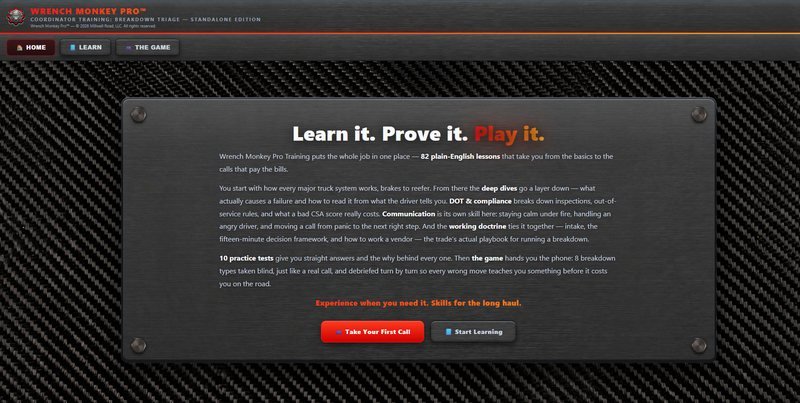
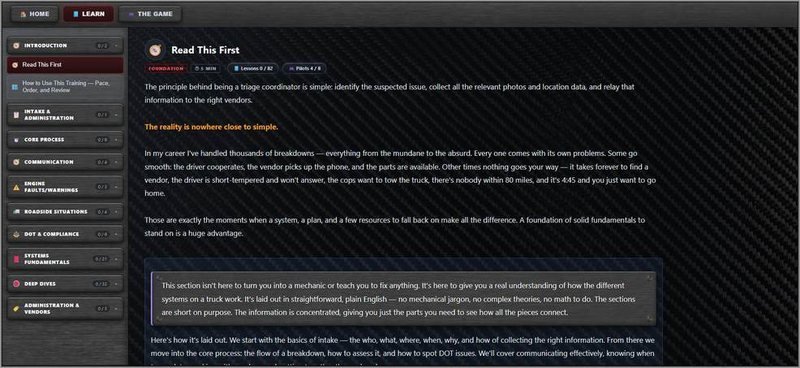
Eighty-two lessons in ten sections — how the systems work, how a call actually runs, and what happens when a truck gets pulled in for inspection. Straightforward, no mechanical jargon, no math to do.
It won't turn you into a mechanic and it isn't trying to. It makes you the person on the phone who knows what he's looking at.
What you actually learn
Ten sections, and they run in the order the job does.
Not a glossary and not a manual. It follows a call from the phone ringing to the truck moving again, and teaches you what you need at each point along the way.
- The house rule
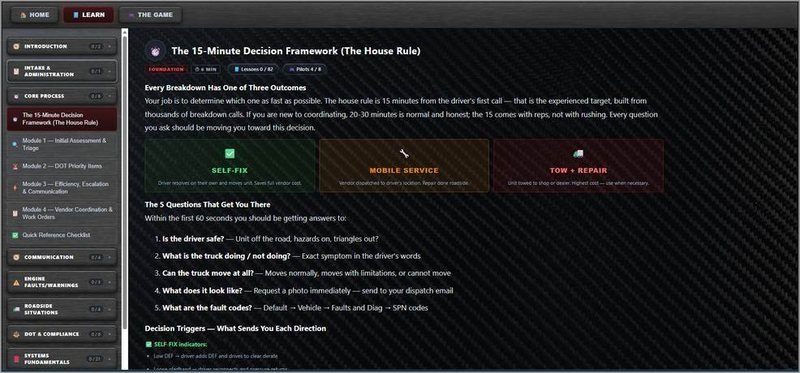
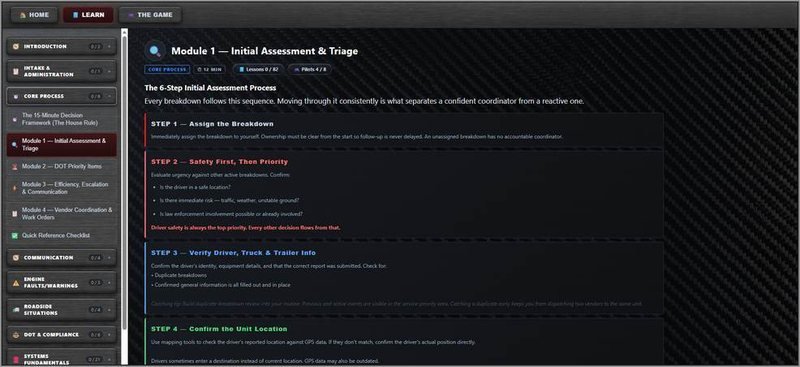
- Fifteen minutes from the driver's first call, you should know which of three ways it goes — he handles it, a vendor comes out, or it gets towed. The section walks the questions that get you there. And it tells you the truth about the number: new coordinators run twenty to thirty minutes, that's normal, and the fifteen comes with reps rather than with rushing.
- Getting the information
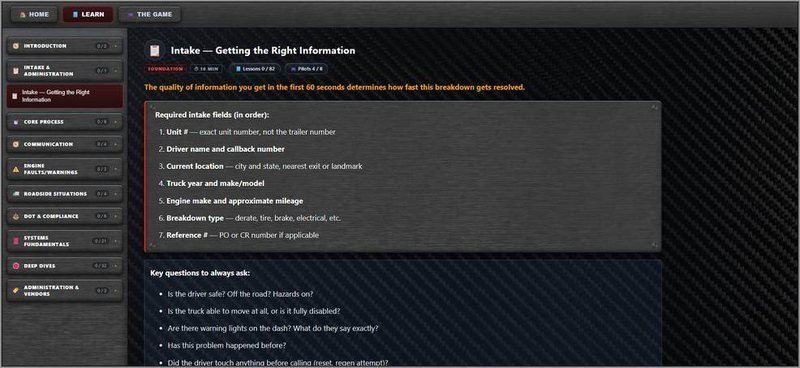
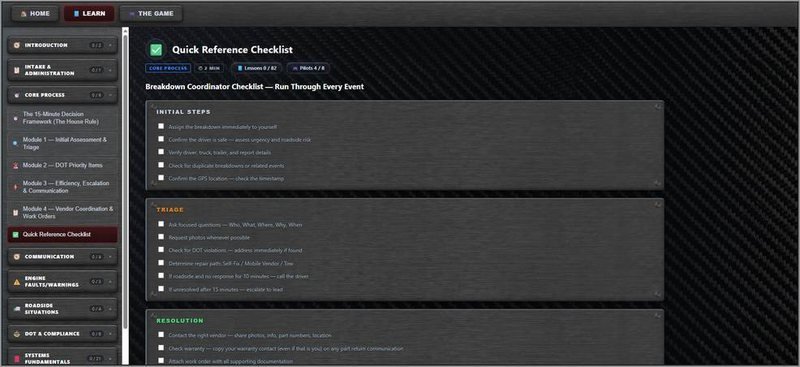
- What to ask, in what order, and what to write down — so the next person who picks up the file can carry on without starting over. What you get in the first sixty seconds decides how fast the whole thing goes.
- The person on the other end
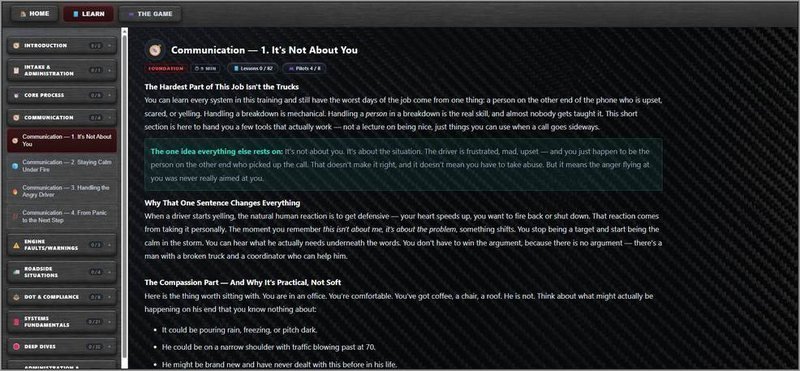
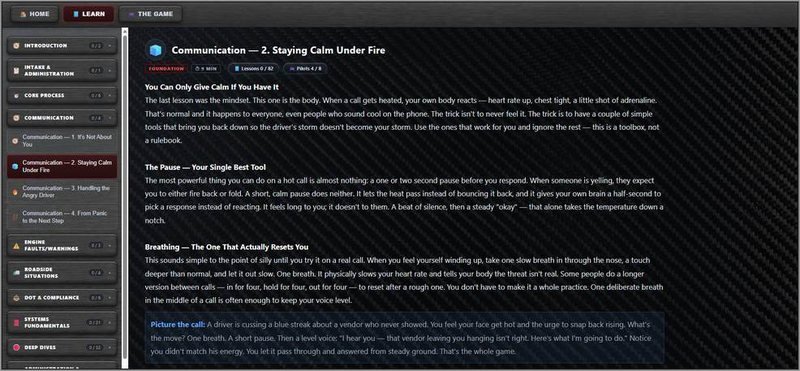
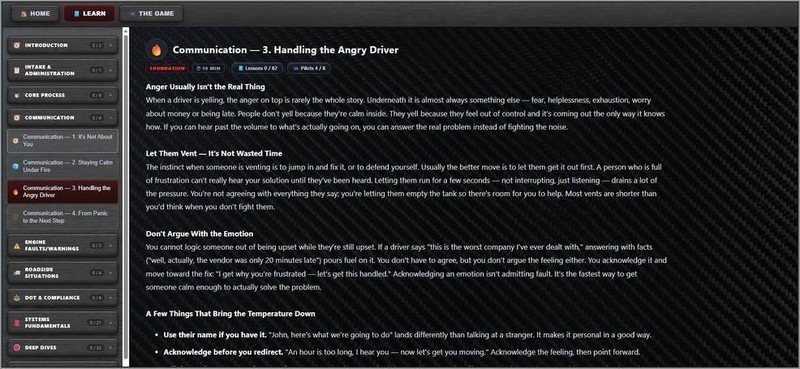
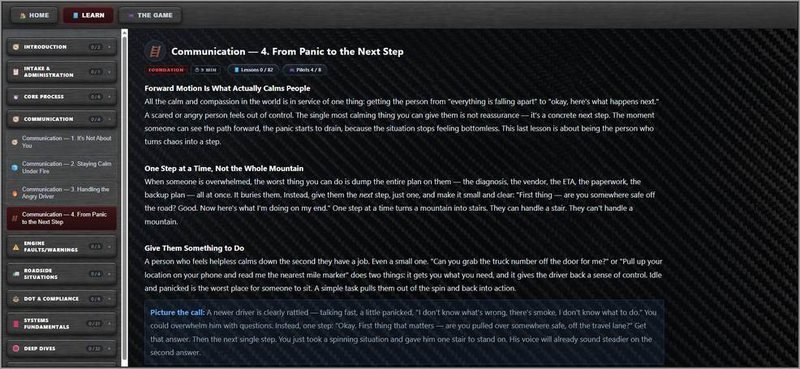
- Four lessons on the driver, not the truck. What to do when he's yelling, how to stay level when it's aimed at you, and how to move somebody from panic to a next step. Handling a breakdown is mechanical. Handling a person in a breakdown is the harder half, and nobody covers it in school or on your first day.
- The DOT stop
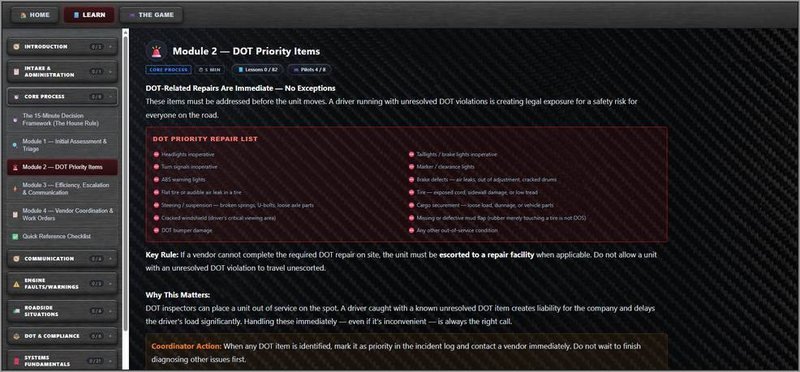
- What the terms mean, what the language on the paperwork means, and what happens in what order. Violations are expensive and they stack. A lot of breakdown calls are already out-of-service conditions before an officer ever sees the truck. Once you can spot one, every minute after that goes into which vendor, not whether.
- Faults and warnings
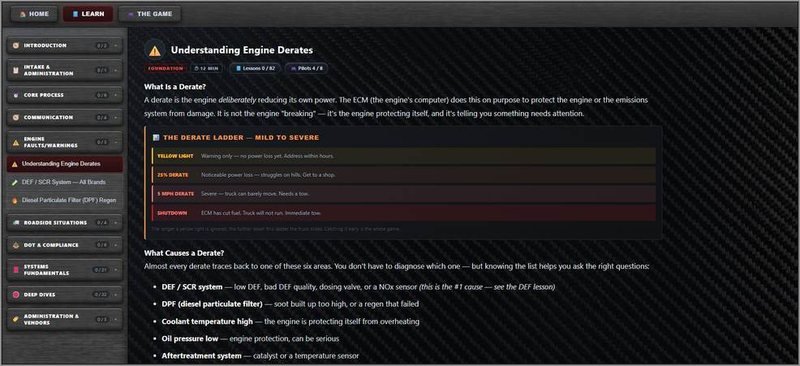
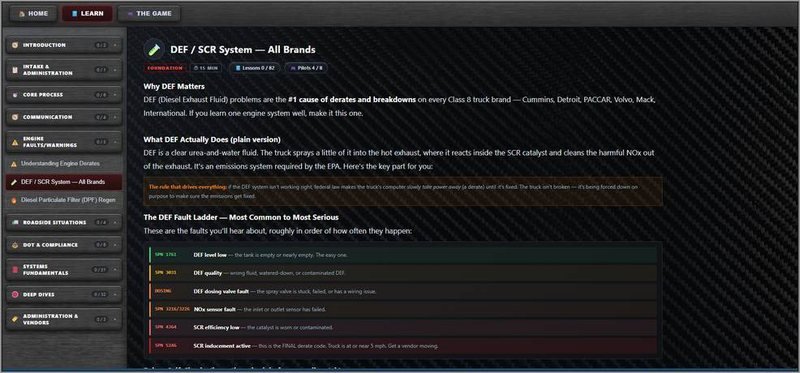
- What a dash light is really telling you, what a fault code is, and which ones mean stop now rather than get it looked at.
- Out on the road
- The situations that come with the shoulder rather than the truck. Where he is, how exposed he is, and what the weather and the clock are doing to the call.
- Vendors and the money
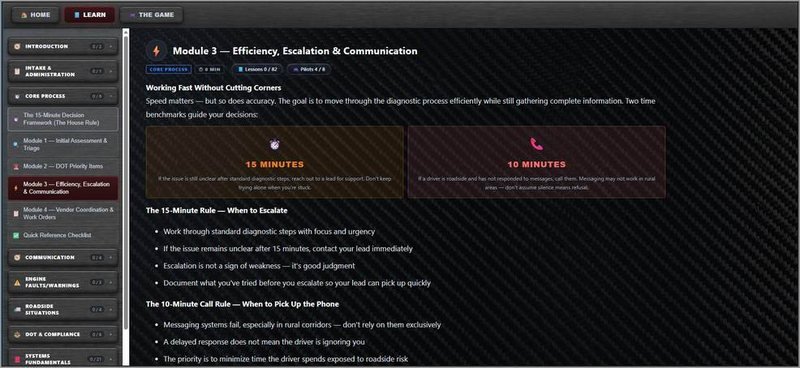
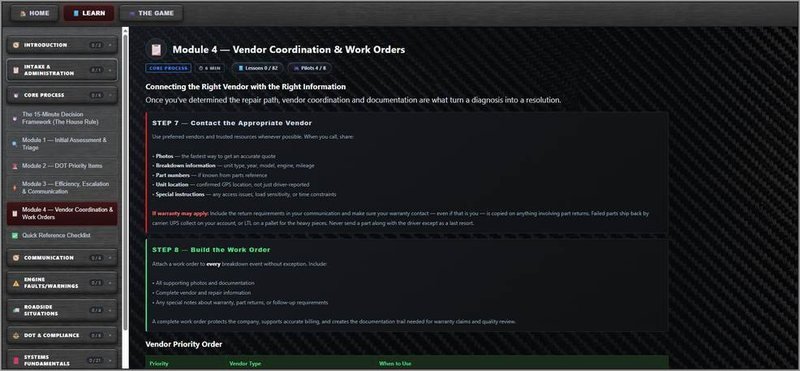
- How authorization works, who owns which dealer network, and the red flags on a shop that's about to take you — refusing a written estimate, pressure to authorize before anybody has looked at it, a number wildly above normal rates. The best money lesson in it: a warranty can cover the tow itself, not only the work at the other end. A tow to the wrong shop can blow the coverage.
The systems side
How the truck works, and where you can go deeper.
Twenty-one short lessons on the systems themselves. Then eight of those systems opened right up, for whoever wants the whole picture.
- Systems Fundamentals
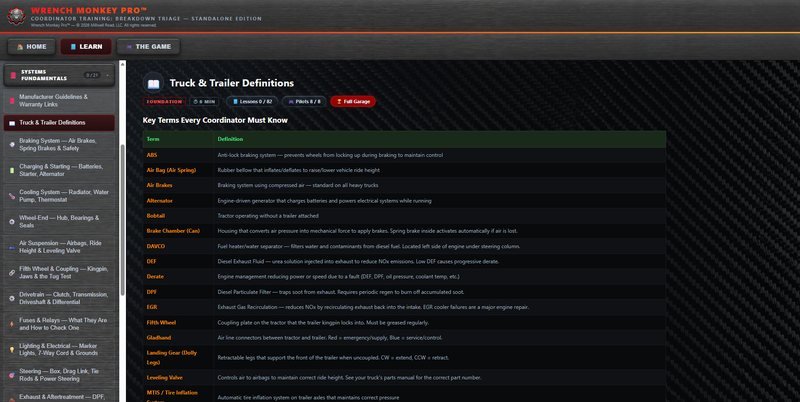
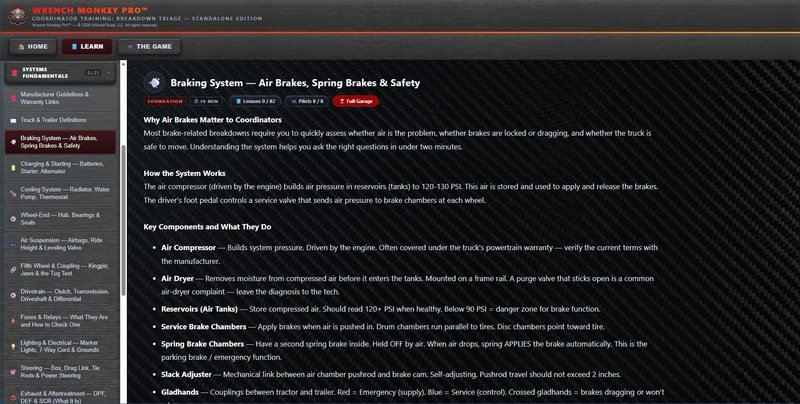
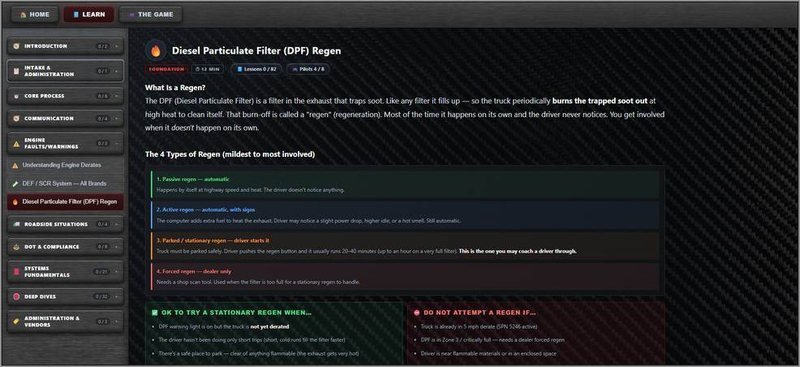
- It covers everything from brakes, charging and starting and cooling, on through wheel-end, air suspension, fifth wheel, drivetrain, fuses and relays, lighting, steering, exhaust and aftertreatment, trailer systems, reefer, tires and glass, right down to the electronics that throw faults nobody can explain to you. Enough on each one that a light on the dash stops being a mystery.
- The deep dives
- Eight systems taken all the way through: air brakes, cooling, drivetrain, tires, lighting and electrical, charging and starting, wheel-end, and reefer. Each one starts with how the system works, moves on to what goes wrong with it, then how to recognize that from what the driver is telling you. It finishes with a test. Somebody can be handed one system at a time rather than the whole truck at once.
- Where the lessons stop
- The lessons tell you where their own advice runs out. What's in here is general, and the manufacturer's rules for that particular truck beat anything general. The training says so on the page rather than letting somebody find out the hard way. Doing the work the normal way can still void a warranty if the maker wants a particular procedure, a shop on their own list, or a specific part.
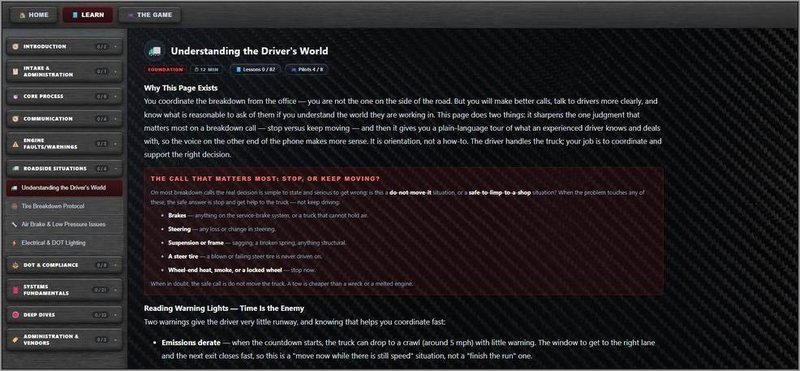
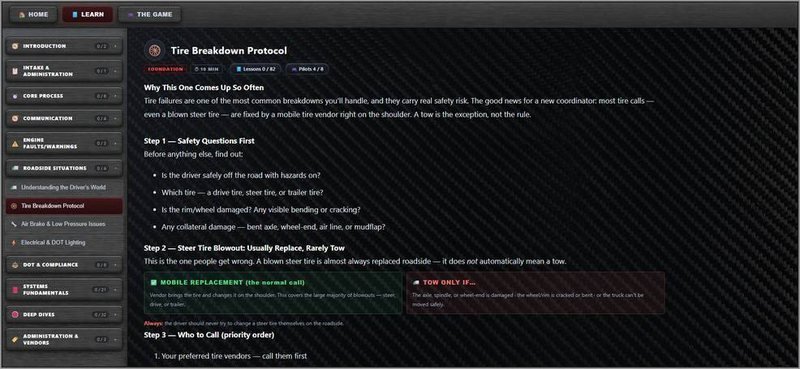
How it's built
Each piece is built to reinforce the last.
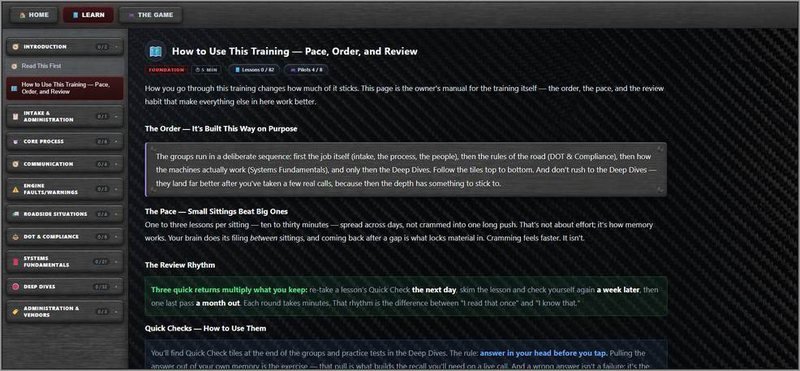
Short lessons on their own don't teach anybody much. What makes it stick is that the material keeps coming back. Nobody is learning something once and hoping they still have it three weeks later when a truck goes down.
- One sitting each
- Every lesson carries the minutes on the front, so you start one knowing you'll finish it. Nothing in here waits for somebody to find a free hour, which is the difference between training that gets done and training that gets put off.
- Seen, not just read
- Where something lands better watched than described, there's a how-to video linked right beside it. Some things you can read three times and still not picture.
- It comes back around
- You meet a thing as a lesson, then again as a question, then again inside a call you're working. Three passes at the same material, each one at the point where it actually matters. That's the whole design. Nothing here is taught once and left behind, so it reinforces without piling on.
- Every answer explains itself
- Nothing in here just marks you wrong. Every scored question carries a written explanation of why the answer is the answer, including the ones you got right. Being told you're wrong teaches nobody anything. Being told why is the part that stays. A wrong answer isn't a failure in here — it's the rep.
- The game
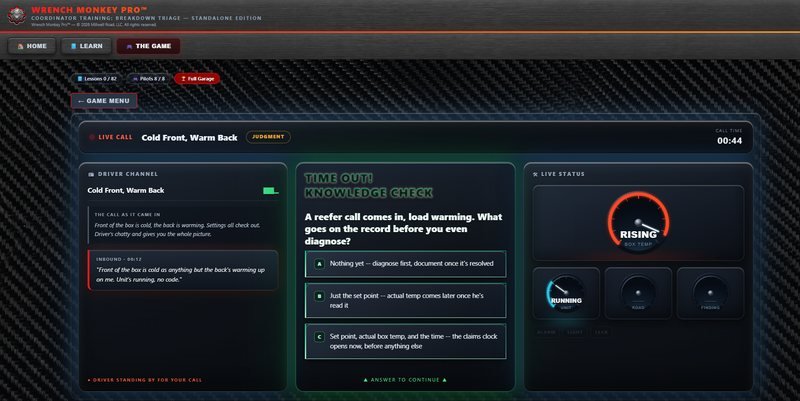
- It hands you the phone and you never know which call is coming next. It puts you in the hot seat. You get comfortable with how a breakdown actually unfolds and how you answer under pressure, before any of it costs you on the road. By the time you reach it you've met most of the material three times, so it's recall rather than guesswork.
There's still a judgment call required in this process. That's not something we can teach someone to do, but we can prepare them with the proper information to help them do it.

What it runs on
One file, and nothing to log into.
- No install, no account
- It's one file. You double-click it and it opens in a browser. There's nothing to sign up for and nothing to keep paying.
- No signal needed
- It works with no internet connection at all, which is the whole point of something that rides in a truck.
- Nothing leaves the machine
- No tracker, no analytics, nothing pulled in from anywhere else. That's a fact about how it's built rather than a promise about how it's run.